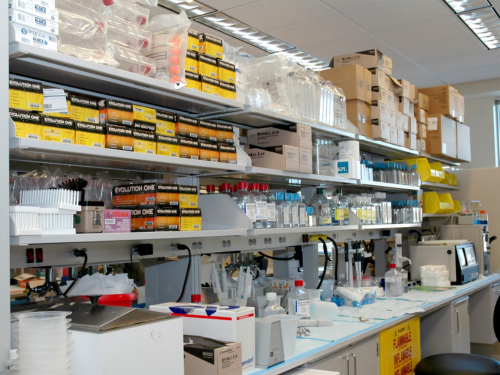
From cleanrooms and bio-labs to engineering workshops and materials storage, environmental monitoring is a critical yet often overlooked responsibility for technical staff in science and research environments.
Temperature, humidity, particulate matter, airflow, and even light levels can all influence the accuracy, reliability, and safety of experiments. In some labs, small changes in room humidity can skew sensitive measurements or damage samples. In others, cleanroom standards (ISO 6–8) must be maintained continuously for compliance and material integrity.
Technical teams are now deploying increasingly sophisticated monitoring networks. This includes connected sensors (LoRaWAN, Zigbee, BLE), calibrated data loggers, and cloud dashboards that aggregate data across multiple zones. Alerts can be set for out-of-spec conditions via SMS, email, or dashboard flags, particularly vital during unmanned hours.
In HE settings, these tools help protect teaching labs and equipment investments. For example, freezers containing student DNA samples or reagents can be monitored 24/7, with automated alerts sent to designated technicians or supervisors.
In industry, environmental monitoring is closely tied to quality assurance and certification audits. Manufacturing and materials R&D teams may log conditions as part of every production or testing run, ensuring that external variables are accounted for. The burden of maintaining this infrastructure often falls to highly skilled technicians and facilities engineers.
Crucially, environmental data is increasingly being logged alongside experimental results to provide full traceability. Some LIMS and ELN systems now integrate this metadata directly. Technical staff often design and maintain these integrations, selecting sensors, configuring APIs, and validating calibration schedules.
There’s also a sustainability angle. Monitoring air flow and temperature trends can help facilities teams fine-tune energy use, reduce waste, and optimise equipment lifespans.
Environmental monitoring is more than box-ticking. It underpins the integrity, safety, and sustainability of scientific and engineering work. As monitoring tools become more connected and data-driven, the role of technical staff in designing, maintaining, and interpreting these systems is more vital than ever.