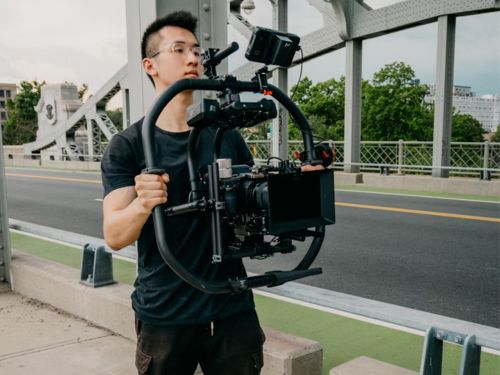
Live-streaming isn’t just for gamers anymore. In higher education (HE) and the tech industry, live-streaming has evolved into a powerful medium for sharing knowledge, demonstrating software, and engaging communities through real-time interaction. From student-led hackathons and departmental research showcases to indie developer devlogs and global product announcements, streaming has become a vital communication channel. As a result, technical staff are now taking center stage – not as presenters, but as the architects of robust, scalable, and accessible broadcast infrastructure.
1. Stream Architecture Basics
Behind every smooth broadcast is a carefully designed pipeline. At a bare minimum, this includes a capture setup (such as cameras and screen-grab tools), an encoder (like OBS Studio or Streamlabs), a content-delivery network (CDN) to distribute the stream, and a publishing platform like YouTube, Twitch, or Vimeo Live.
Technical professionals must integrate these tools into a seamless workflow. That means managing video sources such as webcams, slides, IDEs, or terminal windows, and sometimes even VR environments or game visuals. It’s not uncommon for a single stream to involve layered scenes, dynamic overlays, and voice/video mixing to create an engaging, professional-grade broadcast. Choices around bitrate, resolution, and keyframe intervals must be tuned to fit both the bandwidth limitations and the target audience’s viewing devices.
2. Low-Latency Interactivity
In educational contexts, latency isn’t just a number – it’s a barrier to learning. When streaming to a live coding session, hackathon, or virtual workshop, even a few seconds of delay can fracture the feedback loop between audience and presenter.
To enable seamless real-time interaction, technical teams often deploy sub-second latency modes (e.g. Twitch Low Latency or YouTube Ultra Low Latency) and carefully configure their ingest settings. They may also script chatbot commands for handling tasks like audience polls, Q&A moderation, or spotlighting comments on-screen. In more polished streams; such as professional indie game development updates, this extends to automated overlay transitions, sponsor banners, and real-time alerts synced via APIs or WebSocket servers.
3. Scaling from Classroom to Global
It’s one thing to stream a lecture to 25 students. It’s quite another to serve a 5,000-person global audience watching a product launch in different time zones and network conditions.
Scaling up means preparing for redundancy and resilience. HE and industry teams alike may configure multi-region CDN endpoints, redundant encoders, and adaptive bitrate streaming. They plan for unexpected disruptions by provisioning automatic failover streams, cloud-based ingest routing, and even hot-swappable hardware capture nodes. In more advanced deployments, live streams may be backed by containerized environments or Kubernetes-managed ingest pipelines, ensuring maximum uptime even under network stress or hardware failure.
4. Accessibility and Archiving
Inclusive design is no longer optional, especially for public-facing events and educational broadcasts. Live streams are now expected to come equipped with real-time captions, colourblind-friendly visuals, and transcripts for later reference.
Technical staff must integrate tools like Google Cloud Speech-to-Text, Azure Cognitive Services, or local ASR engines to deliver live captioning, often with real-time correction by human moderators. Archived streams are tagged with metadata, indexed for search, and published to platforms that support multilingual captioning. In some cases, these archives are turned into course materials or reference documentation, extending the life and reach of the original broadcast far beyond the live audience.
5. Metrics and Feedback
Live-streaming isn’t fire-and-forget, it’s a responsive medium. Real-time analytics are critical for stream health and audience engagement.
Technical staff often build or integrate custom dashboards that provide live viewer counts, geographic distribution, engagement markers (like chat spikes or emoji usage), and bitrate stability reports. These metrics allow on-the-fly decisions: a presenter might be told mid-stream to switch video quality due to frame drops in a specific region, or pivot a demo based on which sections generate the most questions. Post-stream, these analytics feed into retrospective reviews, helping teams iterate and improve content delivery for future sessions.
Conclusion
Live-streaming is no longer just an add-on, it’s a core technical discipline. Whether you’re broadcasting a university coding lab, a startup’s product release, or a global hackathon final, technical staff must be fluent in encoding technologies, interactive toolchains, CDN topologies, accessibility standards, and live analytics.
In an era where hybrid events and global collaboration are the norm, live-streaming isn’t just a niche skill. It’s rapidly becoming a foundational capability in the creative-technology stack. Those who master it will not only power better events, they’ll shape the future of how we learn, collaborate, and build in real time.