The fusion of augmented reality (AR) and virtual reality (VR) with remote experimentation is driving innovation in creative‑tech research. Today, technical staff are developing digital prototypes and interactive tools not just for entertainment, but for research and training across fields like healthcare, engineering, and heritage reconstruction.
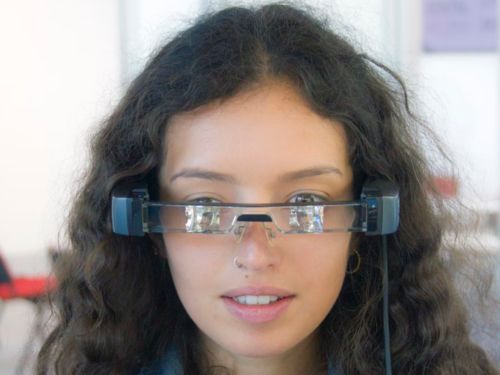
Research groups across campuses are deploying VR labs online; complete with virtual microscopes, interactive models, or collaborative annotation tools. Technical staff build backend servers for multi‑user state synchronisation, asset streaming, and low‑latency spatial audio. AR glasses and VR headsets with depth scanning enable remote students or researchers to record environmental context, ideal for archaeology or environmental‑science projects. Technical teams process incoming mesh/pointcloud data, compress assets for streaming, and integrate AR overlays for remote guides.
HD‑streaming of VR experiments raises questions around consent, data protection, and inclusion. Technical staff coordinate with university ethics boards, implement pseudonymisation, secure data storage, and ensure multi‑platform device support for accessibility.
– Heritage: Simulated walk‑throughs of archaeological sites, reconstructed from lidar.
– Medical education: Students interact with anatomical models in group VR labs.
– Engineering: Teams visualising CAD designs in VR, collaborating internationally.
Gaming‑engines like Unity and Unreal are now central in non‑gaming AR/VR research. Companies partner with universities, handing off engine‑integrated plug‑ins that technical staff can include in courses or campus‑science programmes. This exposes students to live, maintainable code – bridging education and employability
Remote AR/VR experimentation is accelerating research and training in HE, and technical staff are the linchpin-bridging engine pipelines, networked services, data security, and ethical compliance. For those working in industry collaboration, the same skill‑sets are sought after in product‑development or consultancy. As remote immersive research grows, expertise in building resilient, compliant AR/VR systems will remain in high demand.